

Agricultural production generates large quantities of straw and other crop residues every year. Wheat straw, rice straw, corn stalks, barley straw, oat straw, sorghum stalks, and other agricultural residues are produced during harvesting and crop processing. These materials contain organic matter and stored energy, but their low bulk density, irregular shape, high fiber content, and variable moisture can make them difficult to handle efficiently.
Traditionally, agricultural straw may be left on fields, incorporated into soil, used as animal bedding, or burned. These methods can have their own applications, but they do not always provide an efficient way to utilize the full volume of available residues.
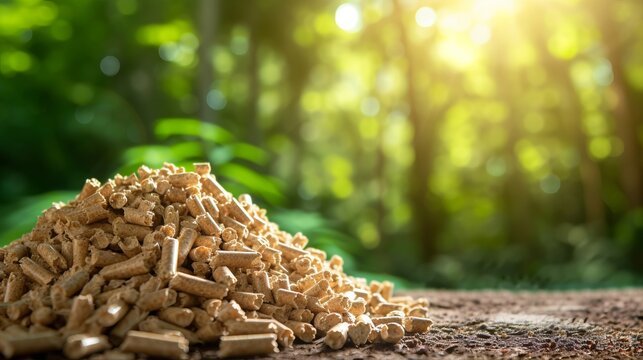
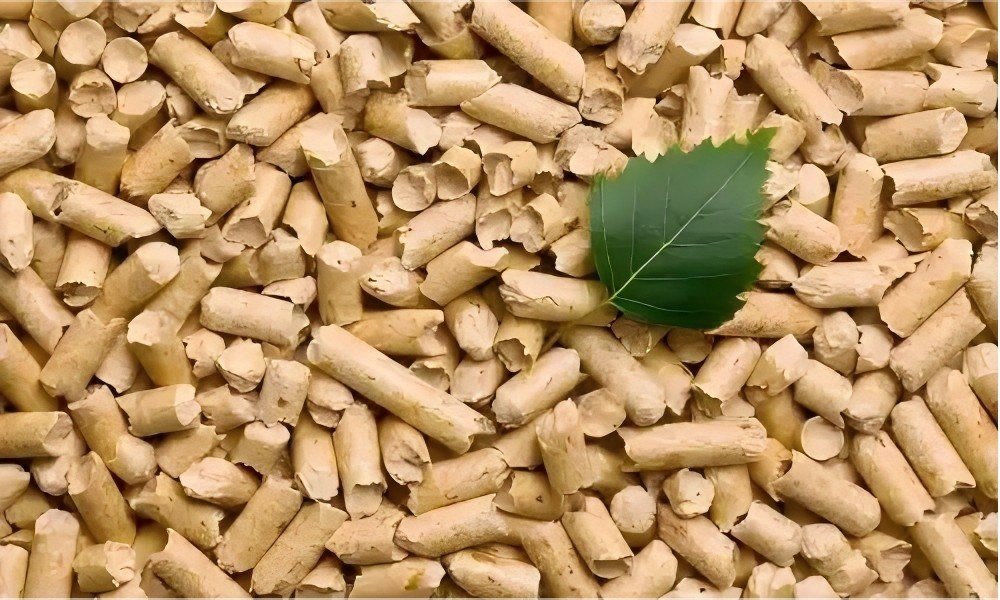
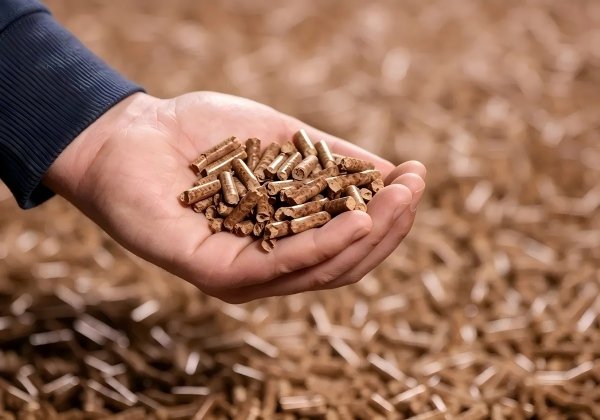
Straw pelletizing offers another waste recycling pathway. By processing agricultural residues into compact pellets, loose straw can be transformed into a standardized biomass product that is easier to transport, store, handle, and use.
A straw pellet mill is the core piece of equipment in this process. It compresses prepared straw through a die to form dense cylindrical pellets. When combined with shredding, drying, grinding, cooling, screening, and packaging equipment, it can become part of a complete agricultural waste recycling system.
This article explains why straw pelletizing is useful for waste recycling, how the process works, what equipment is required, and what factors should be considered when turning agricultural residues into useful biomass products.
What Is Straw Waste Recycling?
Straw waste recycling refers to the collection, processing, and utilization of agricultural residues instead of treating them solely as waste.
Crop residues may include:
- Wheat straw
- Rice straw
- Corn stalks
- Barley straw
- Oat straw
- Sorghum stalks
- Cotton stalks
- Rapeseed straw
- Grass residues
- Other agricultural biomass
Recycling does not necessarily mean that all straw must be processed into fuel.
Straw can have multiple uses, including animal bedding, livestock feed in appropriate forms, soil amendment, mushroom cultivation, bio-based materials, composting, and biomass energy.
Pelletizing is particularly useful when the objective is to convert suitable agricultural residues into a dense solid biomass fuel.
Why Is Straw Difficult to Recycle?
Although straw is an abundant biomass resource, it has several physical characteristics that complicate transportation and utilization.
Low Bulk Density
Loose straw contains a large amount of air.
A truck carrying loose straw may transport a relatively small amount of actual dry biomass compared with its available volume.
This increases transportation requirements.
Long Fibers
Straw contains long, flexible fibers.
These fibers can become tangled and may create feeding problems in processing equipment.
Variable Moisture
Straw moisture varies depending on the crop, harvesting conditions, weather, and storage method.
High-moisture material may require drying before pelletizing.
Irregular Particle Size
Crop residues are rarely uniform immediately after harvesting.
Some pieces may be long stalks while others are already chopped or broken.
Contamination
Straw collected from agricultural fields may contain soil, sand, stones, metal, plastic, or other foreign materials.
These factors mean that agricultural waste normally requires pretreatment before it can be efficiently pelletized.
How Does Straw Pelletizing Support Waste Recycling?
Straw pelletizing changes the physical form of agricultural waste.
Instead of handling loose stalks, the producer creates compact biomass pellets.
The process can provide several recycling benefits.
Densification
Pelletizing significantly increases the bulk density of the material.
Easier Transportation
Compact pellets are easier to transport than loose straw.
Improved Storage
Pellets occupy less storage volume and can be handled using standard bulk material systems.
Standardized Handling
Pellets have a relatively uniform shape and size.
Fuel Utilization
Suitable straw can be converted into solid biomass fuel for compatible heating systems.
Better Resource Utilization
Instead of discarding or underutilizing crop residues, agricultural businesses can establish a processing pathway that turns them into a useful product.
The Basic Straw Pelletizing Process
A typical straw pellet production process is:
Straw Collection → Cleaning → Bale Breaking → Shredding → Drying → Grinding → Moisture Adjustment → Pelletizing → Cooling → Screening → Packaging
The actual process may be simpler or more complex depending on raw material conditions.
For example, dry chopped straw may require minimal pretreatment.
Baled straw with high moisture and significant contamination may require a complete preparation system.
1. Straw Collection
The first stage of agricultural waste recycling is collecting the straw.
Straw may be available directly from farms or agricultural processing facilities.
It can arrive as:
- Loose material
- Round bales
- Square bales
- Chopped straw
Baling is commonly used to make field collection and transportation easier.
The collection system should consider the distance between farms and the processing plant.
Transportation costs can have a significant influence on the overall economics of straw recycling.
2. Straw Storage
Collected straw may need to be stored before processing.
The storage area should protect the raw material from excessive rain and moisture.
Poor storage can increase moisture and contamination.
For large projects, raw material storage capacity should also account for seasonal fluctuations in agricultural residue availability.
A plant that depends on seasonal crops may need sufficient storage to maintain production when fresh straw is temporarily unavailable.
3. Cleaning Agricultural Straw
Before processing, unwanted materials should be removed as much as practical.
Common contaminants include:
- Stones
- Sand
- Soil
- Metal
- Plastic
- Twine
Cleaning protects downstream machinery.
A magnetic separator can remove ferrous metals.
Screening equipment can remove certain oversized materials.
Good harvesting and collection practices can further reduce contamination.
4. Bale Breaking
When baled straw is used as the feedstock, a bale breaker can separate compressed straw into loose material.
This provides a more stable feed to the shredder and grinder.
Efficient bale breaking is particularly important for automated production lines because manual bale opening can increase labor requirements.
5. Straw Shredding
Long straw fibers should normally be reduced before pelletizing.
A straw shredder cuts long stalks into shorter pieces.
This improves material flow and makes subsequent grinding more efficient.
Shredding can reduce:
- Fiber length
- Material bridging
- Feeding problems
- Grinder load fluctuations
The objective is to prepare the straw for further size reduction.
6. Drying the Straw
Moisture management is one of the most important parts of straw recycling.
If straw contains excessive moisture, it may not pelletize properly.
Possible problems include:
- Soft pellets
- Poor bonding
- Low density
- Increased energy consumption
- Difficult cooling
- Storage instability
An industrial rotary dryer machine can reduce moisture before grinding and pelletizing.
The dryer should be designed according to the initial moisture, target moisture, material throughput, and available heat source.
Over-drying should also be avoided because excessive drying may increase dust and unnecessary thermal energy consumption.
7. Grinding
After drying, the straw may pass through a hammer mill or biomass grinder.
Grinding creates a more uniform particle size.
This is important because particle size affects:
- Feeding
- Compression
- Pellet density
- Pellet durability
- Production capacity
- Electricity consumption
The material should be ground sufficiently for stable pellet formation without unnecessarily increasing grinding energy.
8. Moisture Adjustment
After grinding, moisture should be checked again.
The pelletizing process requires relatively stable material conditions.
If necessary, the production line may include conditioning equipment for moisture and temperature adjustment.
The objective is to provide the pellet mill with material that can be compressed consistently.
9. Pelletizing With a Straw Pellet Mill
The central step is pelletizing.
A straw pellet mill compresses prepared agricultural residues through a die to produce dense pellets.
In a ring-die pellet mill, the material enters the compression chamber.
Rotating rollers force the straw against the die.
The material is compressed into the die holes.
As the compressed biomass exits the die, cutting knives divide it into pellets.
Mechanical pressure and friction generate heat during the process. For many biomass materials, natural lignin can contribute to particle bonding under suitable compression conditions.
This allows straw to be formed into pellets without relying entirely on external binders.
(Learn more: https://richipelletizer.com/straw-pellet-machine-for-sale/)
Why Is the Pellet Mill Important?
The pellet mill determines how effectively prepared straw can be densified.
Its performance influences:
- Production capacity
- Pellet density
- Pellet durability
- Energy consumption
- Die life
- Roller wear
- Production stability
However, the pellet mill cannot compensate for poor raw material preparation.
If the straw is too wet, too coarse, or heavily contaminated, even a high-capacity machine may not produce stable pellets.
Therefore, the pellet mill should always be considered as part of the complete processing system.
10. Cooling the Pellets
Fresh pellets leave the pellet mill hot.
They may also contain residual moisture.
A pellet cooler reduces their temperature and helps stabilize their structure.
Cooling is important before screening and packaging.
A properly designed cooling system can help:
- Improve pellet durability
- Reduce moisture
- Prevent condensation
- Improve storage stability
- Reduce breakage
For large commercial plants, counterflow coolers are commonly used.
11. Screening the Finished Pellets
After cooling, pellets are screened.
Screening removes:
- Fines
- Broken pellets
- Oversized particles
- Unstable material
The finished product becomes more uniform.
Fines can often be recycled back to the pellet mill.
This supports the overall waste recycling objective by reducing material loss.
12. Packaging and Storage
The finished pellets can be packed in bags or transported in bulk.
Small commercial users may prefer bagged products.
Large biomass fuel consumers may use bulk transportation and silo storage.
Regardless of the method, the pellets should be protected from excessive moisture.
Moisture can cause pellets to soften and break apart.
How Straw Pelletizing Reduces Waste Volume
One of the major advantages of pelletizing is densification.
Loose straw has a low bulk density.
When compressed into pellets, the same biomass occupies considerably less volume.
This can improve:
- Transportation efficiency
- Warehouse utilization
- Handling efficiency
- Feeding efficiency
For agricultural waste recycling projects, this physical transformation is important because the cost of moving loose biomass can otherwise be a major obstacle to utilization.
How Straw Pellets Can Be Used as Biomass Fuel
Suitable straw pellets can be used as solid biomass fuel in compatible combustion systems.
Potential applications include:
Biomass Boilers
Pellets can be fed into appropriately designed biomass boilers.
Industrial Heating
Factories may use biomass pellets to generate process heat where suitable combustion equipment is available.
Agricultural Heating
Greenhouses, farms, and agricultural processing facilities may use biomass fuel for heating.
Commercial Heating
Some commercial heating systems can use standardized biomass pellets.
On-Site Energy Use
Agricultural processing facilities that generate large quantities of straw may potentially process their residues into fuel for compatible on-site heating systems.
The suitability of straw pellets depends on their fuel properties and the requirements of the combustion equipment.
Why Pelletizing Is Better Than Transporting Loose Straw
Transportation is one of the major challenges associated with agricultural residues.
Loose straw has:
- Low bulk density
- Irregular dimensions
- Large volume
- Difficult automated handling
Pellets are much more compact.
This means producers can transport more biomass in a given storage or transportation volume.
The economic benefit depends on transportation distance, raw material availability, pellet production costs, and local fuel prices.
Therefore, pelletizing can be particularly attractive when there is a large local supply of straw and a nearby market for biomass fuel.
Straw Pelletizing and the Circular Use of Agricultural Resources
Straw pelletizing can support a more circular approach to agricultural resource utilization.
The general concept is:
Crop Production → Agricultural Residues → Collection → Processing → Pelletizing → Biomass Fuel → Heat → Productive Use
Instead of allowing residues to remain unused, agricultural businesses can establish a pathway for returning their stored energy to productive applications.
The process can also create connections between agricultural production and local energy systems.
For example, a region with large wheat or rice production may have substantial quantities of straw available after harvesting.
A local pellet plant can collect suitable residues, process them into biomass pellets, and supply them to nearby users.
This can reduce the need to move loose agricultural waste over long distances.
Straw Pelletizing Can Create a Marketable Product
Waste recycling becomes more attractive when the processed material has a clear end use.
Pelletizing changes agricultural residues from a loose waste material into a standardized product.
Depending on market requirements, pellets can be sold to:
- Biomass boiler operators
- Industrial heating users
- Agricultural facilities
- Commercial heating users
- Biomass fuel distributors
The actual market depends on local fuel demand and pellet quality requirements.
Before building a plant, investors should therefore identify potential customers and understand their fuel specifications.
What Determines the Economics of Straw Pellet Recycling?
The economic feasibility of a straw pellet plant depends on several factors.
Raw Material Cost
The availability and collection cost of straw are critical.
Free field residues are not necessarily free feedstock because collection, baling, transportation, and storage all have costs.
Transportation
Long-distance transportation can significantly increase costs.
Local sourcing is often important for agricultural residue projects.
Drying
High-moisture straw requires more thermal energy.
Electricity
Grinding and pelletizing consume electrical power.
Equipment Investment
A complete production line requires investment in preparation, drying, pelletizing, cooling, screening, packaging, and control equipment.
Maintenance
Wear parts and routine maintenance must be included in operating costs.
Product Value
The final value of the pellets depends on local biomass fuel demand, quality, transportation, and competing fuels.
How to Select a Straw Pellet Mill
When selecting equipment for a straw recycling project, buyers should consider more than the machine’s advertised capacity.
Important factors include:
Raw Material Type
The machine should be suitable for the specific agricultural residue.
Moisture
The pellet mill should work with the expected moisture range after drying.
Pellet Diameter
Select the desired pellet size according to the end application.
Capacity
Determine the required hourly production based on available raw material and market demand.
Die Compression Ratio
The die should provide suitable compression for the straw being processed.
Roller and Die Durability
Agricultural residues can contain abrasive materials, so wear resistance is important.
Feeding System
The pellet mill should receive material consistently.
Automation
Larger plants may benefit from automatic feeding, lubrication, overload protection, and centralized monitoring.
Maintenance
Easy access to wear parts can simplify routine maintenance.
(go to website:RICHI Pelletizer)
Why a Complete Straw Pellet Production Line Is Important
A pellet mill is only one part of a recycling system.
Consider a plant with a high-capacity pellet mill but an undersized dryer.
The pellet mill cannot operate at full capacity because the material is not sufficiently dried.
Similarly, an undersized hammer mill can limit the supply of properly prepared material.
An insufficient cooler can create a bottleneck after pelletizing.
Therefore, the equipment should be balanced.
A complete straw pellet line may include:
Raw Material Receiving
↓
Cleaning and Bale Breaking
↓
Shredding
↓
Drying
↓
Grinding
↓
Buffer Storage and Feeding
↓
Pelletizing
↓
Cooling
↓
Screening
↓
Packaging
This integrated approach can provide better production stability.
How to Improve Straw Pellet Quality
Good pellet quality supports efficient recycling because less material is lost during transportation and handling.
Several factors should be controlled.
Moisture
Maintain suitable and stable moisture.
Particle Size
Use appropriate grinding conditions.
Fiber Length
Avoid excessively long fibers.
Die Selection
Match compression conditions to the raw material.
Feeding
Maintain stable material flow.
Cooling
Cool pellets adequately before packaging.
Screening
Remove excessive fines.
Storage
Protect finished pellets from moisture.
Common Agricultural Residues That Can Be Pelletized
Different crop residues can potentially be processed into biomass pellets.
Wheat Straw
Wheat straw is widely available in many agricultural regions and can be processed after appropriate preparation.
Rice Straw
Rice straw can be pelletized but may require careful control of ash, mineral content, and raw material cleanliness.
Corn Stalks
Corn stalks can be shredded, dried, ground, and pelletized.
Barley Straw
Barley straw is another agricultural residue that can be considered for biomass pellet production.
Sorghum Residues
Sorghum stalks and related residues may also be used where suitable.
The actual suitability should be determined through material testing.
What Should Be Tested Before Building a Straw Pellet Plant?
Raw material testing can reduce project uncertainty.
Tests may evaluate:
- Moisture
- Particle size
- Bulk density
- Ash content
- Calorific value
- Pellet durability
- Pellet density
- Production capacity
- Energy consumption
The results can help determine the appropriate dryer, grinder, die, pellet mill, cooler, and other equipment.
This is particularly important for large commercial recycling projects.
Straw Pelletizing as Part of a Waste Management Strategy
Straw pelletizing should not be viewed as a universal solution for all agricultural waste.
It is one possible utilization pathway.
A practical agricultural waste management strategy may combine several approaches.
For example:
- Some straw may return to the soil.
- Some may be used for livestock applications.
- Some may be composted.
- Suitable dry residues may be processed into fuel pellets.
- Other residues may be used for bio-based products.
The best solution depends on local agricultural conditions, soil management practices, livestock requirements, energy demand, and available markets.
Environmental Considerations
Turning agricultural residues into biomass fuel can improve material utilization, but the environmental performance of a pellet project depends on the complete supply chain.
Important factors include:
- How the straw is collected
- Transportation distance
- Drying energy
- Electricity consumption
- Fuel used for drying
- Pellet transportation
- Combustion technology
- Ash management
A project should therefore evaluate the entire system rather than assuming that every pelletizing project has the same environmental benefits.
Future Potential of Straw Waste Recycling
Agricultural residue utilization is becoming increasingly relevant as industries look for ways to improve resource efficiency.
Straw is produced every year as part of normal agricultural activity.
With appropriate collection, processing, and market demand, some of this material can become a useful source of biomass energy.
Pelletizing provides a standardized form that can integrate with modern storage, transportation, and automated feeding systems.
For agricultural regions with large quantities of crop residues, this creates an opportunity to connect waste management with local biomass energy production.
Conclusion
Straw pelletizing is useful for waste recycling because it changes bulky agricultural residues into a denser, more standardized, and easier-to-handle biomass product.
Wheat straw, rice straw, corn stalks, barley straw, and other crop residues can be collected, cleaned, shredded, dried, ground, and compressed into pellets. A straw pellet mill performs the central densification step, while dryers, grinders, feeders, coolers, screens, conveyors, and packaging machines complete the production system.
The major benefits of pelletizing include improved bulk density, easier transportation, more efficient storage, standardized handling, and the potential utilization of suitable agricultural residues as biomass fuel.
However, successful straw recycling depends on the entire production process. Moisture, particle size, fiber length, contamination, die compression, feeding stability, cooling, storage, and equipment maintenance all influence the final product.
For businesses considering a straw pellet project, the most important step is to design the production line around the actual raw material and intended application. Raw material testing, capacity planning, equipment matching, and market analysis should be completed before selecting the final equipment configuration.
When these factors are properly coordinated, straw pelletizing can provide a practical route for converting agricultural residues from a difficult-to-handle waste stream into a more compact and useful biomass product, helping connect agricultural waste management with resource recovery and biomass energy utilization.