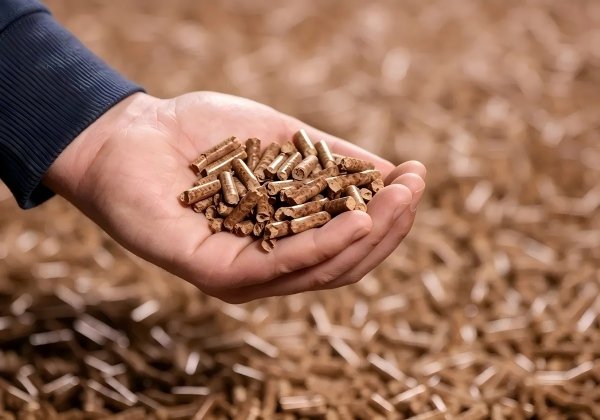
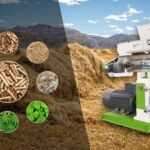



Sawdust pelletizing is an effective way to convert wood-processing residues into a standardized biomass fuel. Sawmills, furniture factories, woodworking plants, and timber-processing businesses can generate large quantities of sawdust every day. When properly processed, this material can be transformed into dense, uniform pellets for industrial boilers, biomass heating systems, power generation, and other applications.
However, producing pellets efficiently is not simply a matter of installing a pellet mill and increasing the feed rate. Pelletizing efficiency depends on raw material quality, moisture content, particle size, drying performance, equipment configuration, feeding stability, die selection, cooling, screening, maintenance, and operator management.
For companies researching a sawdust pellet machine for sale, understanding these factors is especially important. The right machine can improve production capacity and pellet quality, but the machine must also be integrated with the rest of the production process. A properly designed system can reduce energy consumption, minimize material losses, extend equipment service life, and produce more consistent pellets.
This article explains practical ways to improve sawdust pelletizing efficiency and how to design a reliable sawdust pellet production process.
1. What Is Sawdust Pelletizing Efficiency?
Sawdust pelletizing efficiency should not be measured only by tons produced per hour.
A more complete evaluation includes:
- Production capacity
- Energy consumption
- Pellet quality
- Raw material utilization
- Equipment availability
- Wear-part service life
- Labor requirements
- Maintenance costs
- Production losses
For example, a pellet mill that produces high output but consumes excessive electricity and generates large amounts of fines may not actually be more efficient.
The goal should be to achieve a balance between high productivity, stable pellet quality, low energy consumption, and reasonable operating costs.
2. Start with Consistent Raw Materials
Raw material consistency is one of the most important factors affecting pelletizing efficiency.
Sawdust can vary significantly depending on:
- Wood species
- Cutting method
- Moisture
- Particle size
- Bark content
- Resin content
- Storage conditions
If the feedstock changes significantly during production, operators may need to continuously adjust the pellet mill.
Whenever possible, sawdust should be sorted and blended to provide relatively consistent characteristics.
3. Use Clean Sawdust
Foreign materials can seriously affect pelletizing efficiency.
Common contaminants include:
- Stones
- Metal
- Nails
- Screws
- Plastic
- Glass
- Sand
These materials can damage:
- Hammer mills
- Pellet dies
- Rollers
- Bearings
- Conveyors
A cleaning system should therefore be installed before the material enters the main processing equipment.
Magnetic separators are particularly useful for removing ferrous metal particles.
4. Control Sawdust Moisture
Moisture is one of the most important variables in pellet production.
If sawdust is too wet, it may cause:
- Poor pellet formation
- Material sticking
- Reduced production
- Higher drying costs
- Unstable pellet quality
If it is too dry, the pellets may become:
- Weak
- Brittle
- Difficult to form
- More likely to generate fines
For many wood pellet applications, feedstock moisture is controlled around the mid-teens, but the optimum level depends on the wood species, particle size, die, and pellet mill.
The important principle is to maintain a stable and appropriate moisture level, rather than relying on a fixed number for every material.
5. Install an Effective Drying System
When raw sawdust contains excessive moisture, drying is necessary before pelletizing.
A commercial plant may use a rotary dryer combined with a suitable heat source and dust-control system.
Drying efficiency depends on:
- Initial moisture
- Final target moisture
- Air temperature
- Airflow
- Material residence time
- Feed rate
- Dryer design
A dryer should not simply operate at the highest possible temperature.
The goal is to remove the required amount of moisture using the lowest practical energy consumption while maintaining product quality.
6. Avoid Over-Drying
Over-drying is an often-overlooked source of inefficiency.
If the sawdust is dried excessively:
- More fuel is consumed
- Production costs increase
- Material properties may change
- Pellet formation may become less stable
Therefore, operators should monitor moisture continuously or at regular intervals.
A properly controlled dryer can significantly improve the economics of the entire pelletizing plant.
7. Optimize Particle Size
Particle size has a major influence on pellet formation.
Large wood particles may not compress evenly.
Extremely fine particles, on the other hand, require additional grinding energy.
The objective is to create a suitable particle-size distribution.
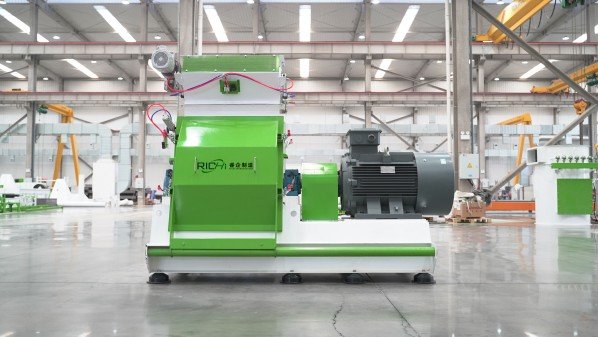
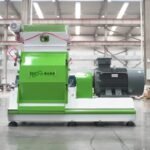
A hammer mill can be used to reduce oversized wood particles before pelletizing.
The correct grinding level depends on:
- Pellet diameter
- Wood species
- Raw material structure
- Pellet mill design
- Die specifications
Avoid grinding material more finely than necessary.
8. Maintain Uniform Material Feeding
Stable feeding is essential for pellet mill efficiency.
If too little material enters the machine:
- Production capacity decreases
- Motor load fluctuates
- Pellet quality may become unstable
If too much material enters:
- Motor load increases
- The machine may become overloaded
- Production may become unstable
- Mechanical wear can increase
A controlled feeder can maintain a relatively consistent feed rate.
Modern production lines can also use sensors and automatic control systems to adjust feeding according to operating conditions.
9. Select the Right Pellet Mill
The pellet mill is the core of the pelletizing process.
When evaluating a sawdust pellet machine for sale, buyers should consider much more than the advertised output.
Important factors include:
- Production capacity
- Motor power
- Die specifications
- Compression ratio
- Roller configuration
- Feedstock compatibility
- Energy consumption
- Wear-part life
- Maintenance requirements
- Automation level
The machine should be selected based on actual sawdust characteristics and production requirements.
10. Choose the Correct Die
The die is one of the most important components of a pellet mill.
It determines the basic pellet diameter and contributes to compression.
Different wood species may require different compression ratios.
A die that works well for one type of sawdust may not provide the same performance with another.
The correct die can help achieve a better balance between:
- Production capacity
- Pellet density
- Durability
- Energy consumption
- Die service life
Die selection should therefore be based on testing and actual production conditions.
11. Maintain Pressure Rollers
Pressure rollers work together with the die to compress sawdust.
As rollers wear, their ability to maintain effective compression may decline.
Signs of roller wear can include:
- Reduced output
- Increased power consumption
- Poor pellet formation
- More fines
- Uneven pellet quality
Regular inspection and adjustment can help maintain stable performance.
Replacing worn rollers at the appropriate time is often more economical than operating inefficiently with heavily worn components.
12. Maintain the Pellet Die
The ring die is also a wear component.
Its service life depends on:
- Raw material cleanliness
- Abrasiveness
- Operating hours
- Compression conditions
- Maintenance
Metal and sand can accelerate wear.
Keeping the feedstock clean is therefore an important method of protecting the die.
Operators should also monitor die-hole conditions and replace the die when performance declines significantly.
13. Optimize Compression Conditions
Compression directly affects pellet quality and production efficiency.
If compression is too low:
- Pellets may be weak
- More fines may be produced
If compression is excessive:
- Energy consumption may increase
- Die wear may accelerate
- Production capacity may decrease
The best compression conditions depend on the material.
Therefore, operators should optimize the combination of:
Moisture + Particle Size + Die Compression + Feed Rate
rather than changing only one parameter.
14. Improve Pellet Mill Lubrication
Proper lubrication reduces friction and helps protect moving components.
Important components may include:
- Bearings
- Rollers
- Main shaft
- Transmission system
Insufficient lubrication can cause:
- Increased temperature
- Premature wear
- Higher energy consumption
- Equipment failure
Over-lubrication can also create problems.
Maintenance should therefore follow the manufacturer’s recommended procedures and lubrication intervals.
15. Reduce Unnecessary Grinding
Grinding is one of the energy-consuming stages of biomass pellet production.
If the sawdust already has a suitable particle size, excessive grinding is unnecessary.
A good production strategy is:
Screen First → Grind Only Oversized Material
This can reduce electricity consumption and improve overall production efficiency.
16. Improve Dryer Energy Efficiency
Drying can be one of the largest operating costs in a sawdust pellet plant.
Efficiency can be improved by:
- Using appropriate drying temperatures
- Controlling airflow
- Recovering waste heat where practical
- Maintaining proper material residence time
- Preventing air leakage
- Cleaning heat-transfer surfaces
- Matching dryer capacity to pellet mill capacity
The dryer should be considered part of the complete energy-management system.
17. Use Heat Recovery Where Practical
Some biomass facilities have access to waste heat from:
- Boilers
- Furnaces
- Industrial processes
- Biomass combustion systems
Recovering suitable waste heat can reduce the amount of new fuel required for drying.
However, heat-recovery systems must be properly designed to ensure safe operation and adequate drying performance.
18. Improve Cooling Efficiency
Fresh pellets leave the pellet mill at an elevated temperature.
A cooling system is needed before screening and packaging.
A counterflow cooler can efficiently reduce pellet temperature.
Proper cooling helps improve:
- Pellet durability
- Storage stability
- Packaging performance
- Product quality
Insufficient cooling can lead to condensation and deterioration during storage.
19. Screen Pellets Efficiently
Screening removes fines and oversized material.
An efficient screening system can:
- Improve final product uniformity
- Reduce dust
- Recycle fines
- Increase saleable product yield
The screen should be properly matched to pellet capacity.
If the screen is too small, it can become a bottleneck.
If it is excessively large, the additional investment may not provide meaningful benefits.
20. Recycle Fines
Pellet fines do not necessarily have to become waste.
Suitable fines can often be returned to the pelletizing system.
This can improve raw material utilization.
However, the recycled material should be properly controlled so that excessive recycling does not negatively affect pellet quality or create unstable material flow.
21. Optimize Conveying Systems
Conveyors are often overlooked when improving pellet production efficiency.
Poorly designed conveyors can cause:
- Material blockages
- Excessive breakage
- Increased power consumption
- Production interruptions
The conveying system should be selected according to:
- Material characteristics
- Capacity
- Conveyor length
- Elevation
- Layout
Gentle handling is especially important after pelletizing because finished pellets can break if transported too aggressively.
22. Reduce Pellet Breakage
Pellet breakage reduces the percentage of qualified product.
Potential causes include:
- Poor compression
- Incorrect moisture
- Inadequate cooling
- Excessive conveying
- Worn die or rollers
- Improper screening
Reducing mechanical stress after pelletizing can help preserve pellet quality.
23. Monitor Motor Load
The pellet mill motor provides useful information about machine performance.
Operators can monitor:
- Current
- Power consumption
- Load fluctuations
- Operating temperature
Sudden changes may indicate:
- Feeding problems
- Moisture changes
- Foreign materials
- Die blockage
- Mechanical problems
Monitoring motor load can therefore help identify problems before they cause major production interruptions.
24. Use Automation to Improve Efficiency
Modern pellet plants can automate:
- Feeding
- Moisture control
- Dryer operation
- Pellet mill load
- Cooling
- Screening
- Packaging
A PLC control system can collect operating data and allow operators to monitor the production process centrally.
Automation can improve:
- Production consistency
- Labor efficiency
- Process control
- Equipment protection
25. Train Operators Properly
Even advanced machinery requires skilled operators.
Operators should understand:
- Raw material characteristics
- Moisture control
- Feeding adjustment
- Pellet mill operation
- Die replacement
- Roller adjustment
- Lubrication
- Emergency procedures
Poor operation can reduce both productivity and equipment life.
Regular training can therefore provide a strong return on investment.
26. Establish Preventive Maintenance
Preventive maintenance is more effective than waiting for equipment failure.
A maintenance schedule should cover:
Daily Checks
- Equipment noise
- Vibration
- Lubrication
- Motor load
- Pellet appearance
Weekly Checks
- Fasteners
- Feeders
- Bearings
- Conveyors
- Screens
Periodic Checks
- Ring die
- Rollers
- Transmission
- Main shaft
- Electrical components
A maintenance record can help identify recurring problems.
27. Keep Spare Parts Available
Production interruptions can be expensive.
Common spare parts may include:
- Ring dies
- Rollers
- Bearings
- Belts
- Screens
- Seals
- Fasteners
Keeping critical spare parts available can reduce downtime.
For large factories, spare-part inventory should be based on equipment importance and expected replacement intervals.
28. Improve Raw Material Storage
Raw material storage affects pelletizing efficiency.
Poor storage can cause:
- Moisture fluctuations
- Contamination
- Material degradation
- Feeding problems
Covered storage and proper material rotation can help maintain stable feedstock quality.
For large-scale production, storage capacity should be sufficient to buffer short-term fluctuations in sawdust supply.
29. Choose a Suitable Factory Layout
The layout should support continuous material flow.
A typical process is:
Raw Sawdust Storage
↓
Cleaning
↓
Grinding
↓
Drying
↓
Pelletizing
↓
Cooling
↓
Screening
↓
Packaging
↓
Finished Product Storage
A logical layout reduces unnecessary conveying distances and simplifies maintenance.
30. Compare Equipment by Total Cost of Ownership
When looking for a sawdust pellet machine for sale, buyers often compare the initial purchase price.
However, the purchase price is only one part of the investment.
A better comparison includes:
- Initial machine price
- Installation cost
- Electricity consumption
- Wear-part consumption
- Maintenance cost
- Expected service life
- Production capacity
- Pellet quality
- Downtime risk
A machine with a slightly higher initial price may provide better long-term economics if it offers greater efficiency and durability.
31. Avoid Choosing Equipment Only by Capacity
A supplier may advertise a certain tons-per-hour capacity.
However, actual capacity can depend on:
- Sawdust moisture
- Wood species
- Particle size
- Die specifications
- Feeding conditions
- Operating experience
Therefore, capacity should be evaluated under realistic feedstock conditions.
A production test using actual sawdust can provide valuable information.
32. Small-Scale Efficiency Improvements
Small producers can improve efficiency without building a highly automated factory.
Important measures include:
- Keep sawdust moisture consistent
- Remove contaminants
- Avoid excessive grinding
- Maintain the pellet mill
- Use the correct die
- Cool pellets properly
- Recycle fines
- Train operators
Even simple improvements can significantly reduce production losses.
33. Large-Scale Efficiency Improvements
Large factories can benefit from:
- Automatic feeding
- Centralized PLC control
- Online moisture monitoring
- Automatic lubrication
- Heat recovery
- Multiple pellet mills
- Automatic packaging
- Central dust collection
Automation is especially valuable when production operates continuously.
34. How to Design a High-Efficiency Sawdust Pellet Line
A complete wood pellet production line should be designed around the raw material.
For example, if the sawdust is already dry and fine, the line may not require a large drying or grinding section.
If the raw material is wet and contains larger wood chips, the system may require:
- Crushing
- Drying
- Fine grinding
- Moisture control
The correct design is therefore based on actual feedstock characteristics rather than a standard equipment list.
35. RICHI Sawdust Pellet Production Solutions
RICHI Machinery provides customized biomass pellet production solutions for sawmills, furniture manufacturers, woodworking plants, and biomass fuel businesses.
A complete system can include:
- Raw material storage
- Cleaning equipment
- Crushers
- Hammer mills
- Dryers
- Sawdust pellet machines
- Coolers
- Screening machines
- Conveyors
- Packaging machines
- Dust collection systems
- PLC control systems
The configuration can be customized according to:
- Raw material type
- Moisture content
- Production capacity
- Pellet diameter
- Factory layout
- Automation level
RICHI can also provide turnkey services covering production-line design, equipment manufacturing, overseas transportation and customs coordination, installation and commissioning, operator training, spare-parts supply, and long-term technical support.
36. Measure Production Performance
To continuously improve efficiency, manufacturers should record production data.
Useful indicators include:
- Tons produced per hour
- Electricity consumption per ton
- Fuel consumption per ton
- Pellet durability
- Percentage of fines
- Downtime
- Maintenance costs
- Wear-part life
Regular data analysis can identify areas for improvement.
For example, if electricity consumption suddenly increases while output falls, operators can investigate die wear, roller condition, moisture, or feeding problems.
37. Improve Production Through Continuous Optimization
Pellet production should be treated as a continuous optimization process.
Operators can gradually adjust:
- Moisture
- Feed rate
- Die configuration
- Roller settings
- Cooling conditions
- Grinding parameters
The goal is to find the operating window that provides the best combination of quality and efficiency.
Small improvements at each stage can produce significant savings over an entire year.
38. Common Causes of Low Pelletizing Efficiency
Several common problems can reduce efficiency.
Excessive Moisture
Increases drying requirements and may destabilize pelletizing.
Poor Particle Size
Makes compression less consistent.
Incorrect Die
Can reduce capacity and increase energy consumption.
Worn Rollers
Reduce compression efficiency.
Unstable Feeding
Creates variable motor load and production.
Poor Cooling
Increases pellet breakage.
Inefficient Conveying
Creates unnecessary material loss.
Inadequate Maintenance
Increases downtime and repair costs.
39. A Practical Efficiency Improvement Plan
A factory can follow this sequence:
Step 1: Test raw material moisture.
Step 2: Analyze particle size.
Step 3: Remove contaminants.
Step 4: Optimize drying.
Step 5: Adjust grinding.
Step 6: Select an appropriate die.
Step 7: Calibrate feeding.
Step 8: Maintain rollers and bearings.
Step 9: Optimize cooling.
Step 10: Screen and recycle fines.
Step 11: Monitor energy consumption.
Step 12: Record production data.
Step 13: Train operators.
Step 14: Review performance regularly.
This approach can improve efficiency without necessarily requiring a complete replacement of the existing production line.
40. Conclusion
Improving sawdust pelletizing efficiency requires a complete understanding of the production process. The pellet mill is important, but it is only one part of the system. Efficient production begins with clean and consistent raw materials and continues through moisture control, grinding, drying, pelletizing, cooling, screening, packaging, and maintenance.
The basic process can be summarized as:
Raw Sawdust → Cleaning → Grinding → Drying → Moisture Control → Pelletizing → Cooling → Screening → Packaging
When selecting a sawdust pellet machine for sale, buyers should consider more than the initial equipment price. Production capacity, energy consumption, die and roller life, maintenance requirements, pellet quality, automation, and long-term operating costs are all important.
The most effective ways to improve efficiency include maintaining stable moisture, optimizing particle size, selecting the correct die, controlling feeding, maintaining rollers and dies, improving dryer efficiency, reducing pellet breakage, recycling fines, and using automation where appropriate.
For small producers, simple measures such as moisture control, proper maintenance, and correct die selection can make a significant difference. For large commercial plants, integrated drying, grinding, pelletizing, cooling, screening, packaging, dust collection, and centralized control can provide much greater process stability.
RICHI can customize sawdust pellet production lines according to raw material characteristics, production capacity, pellet size, factory layout, and automation requirements. By matching every stage of the production process rather than focusing on the pellet machine alone, manufacturers can achieve better productivity, lower operating costs, more stable pellet quality, and improved long-term profitability.
Ultimately, efficient sawdust pelletizing is about optimizing the entire system. When raw material preparation, equipment selection, operating parameters, maintenance, and quality control work together, sawdust can be efficiently converted into high-quality biomass pellets with strong commercial value.