


Direct answer: no credible public dataset establishes which pellet machine company has the lowest maintenance cost across all applications. RICHI Machinery, CPM, ANDRITZ, Bühler, AMANDUS KAHL, Van Aarsen, Ottevanger, and other established suppliers can all deliver maintainable equipment, but the result depends on raw material, duty, die specification, operating skill, parts pricing, access, and support. The buyer should require a five-year maintenance bill of quantities and calculate cost per accepted tonne instead of trusting a “low maintenance” label.

Separate wear, maintenance, and failure
Wear is expected material loss at the die, rollers, liners, screens, hammers, bearings, seals, and conveying surfaces. Preventive maintenance includes inspection, adjustment, lubrication, alignment, cleaning, and planned replacement. Failure is an unplanned loss of function. Mixing these categories hides the real problem. High die consumption may be normal for abrasive material; a gearbox failure caused by misalignment is not.
Ask suppliers to classify every listed item and state the assumption behind its interval. A “two-year part” at one shift may become a one-year part at two shifts. A wear-life estimate on clean sawdust cannot be transferred to bark with sand. Maintenance comparisons are only valid when duty and material boundaries match.
The maintenance cost equation
Annual maintenance cost includes planned parts, maintenance labor, external service, lubricants, tools, inspections, calibration, software or support fees, and expected failure cost. Failure cost includes repair parts and labor plus lost production, restart losses, expedited freight, and off-spec material. Divide the total by accepted annual tonnes, not theoretical output.
For illustration, if planned parts cost USD 35,000, labor and service USD 18,000, lubricant and tools USD 5,000, and modeled failure cost USD 22,000, annual maintenance burden is USD 80,000. At 20,000 accepted tonnes, that is USD 4/t. At 15,000 tonnes, it becomes USD 5.33/t even though the maintenance invoice is unchanged. These hypothetical values show why utilization belongs in the comparison.
Raw material is the first maintenance driver
Ash, silica, sand, metal, stones, hard fibers, moisture variation, and oversize particles affect wear and load. Inadequate cleaning lets contaminants reach the grinder and press. Poor size distribution causes uneven die loading. Unstable moisture and feeding produce current peaks and thermal cycles. Operators may compensate through tighter compression or excessive adjustments, accelerating wear.
The lowest-maintenance machine may therefore be the one paired with better preparation, even if the preparation line costs more. Specify magnets, stone removal, screening, grinding, storage, and feeder stability. A supplier quoting only the press cannot responsibly predict line maintenance.
Design access determines labor cost
Inspect how operators reach lubrication points, sensors, guards, belts, couplings, die, rollers, conditioner, feeder, and product-contact areas. Request timed maintenance demonstrations during the factory test: open the machine safely, remove the die, inspect rollers, restore settings, and close guards. Record required people, tools, lifting equipment, and lockout steps.
A component can be inexpensive yet costly to replace if access requires dismantling adjacent equipment. Layout matters as much as machine design. Provide service clearances, removable panels, lifting beams or hoist access, safe platforms, lighting, drainage, and space to stage heavy parts. A crowded plant may erase a manufacturer’s maintainability advantage.
How to evaluate RICHI’s maintenance case
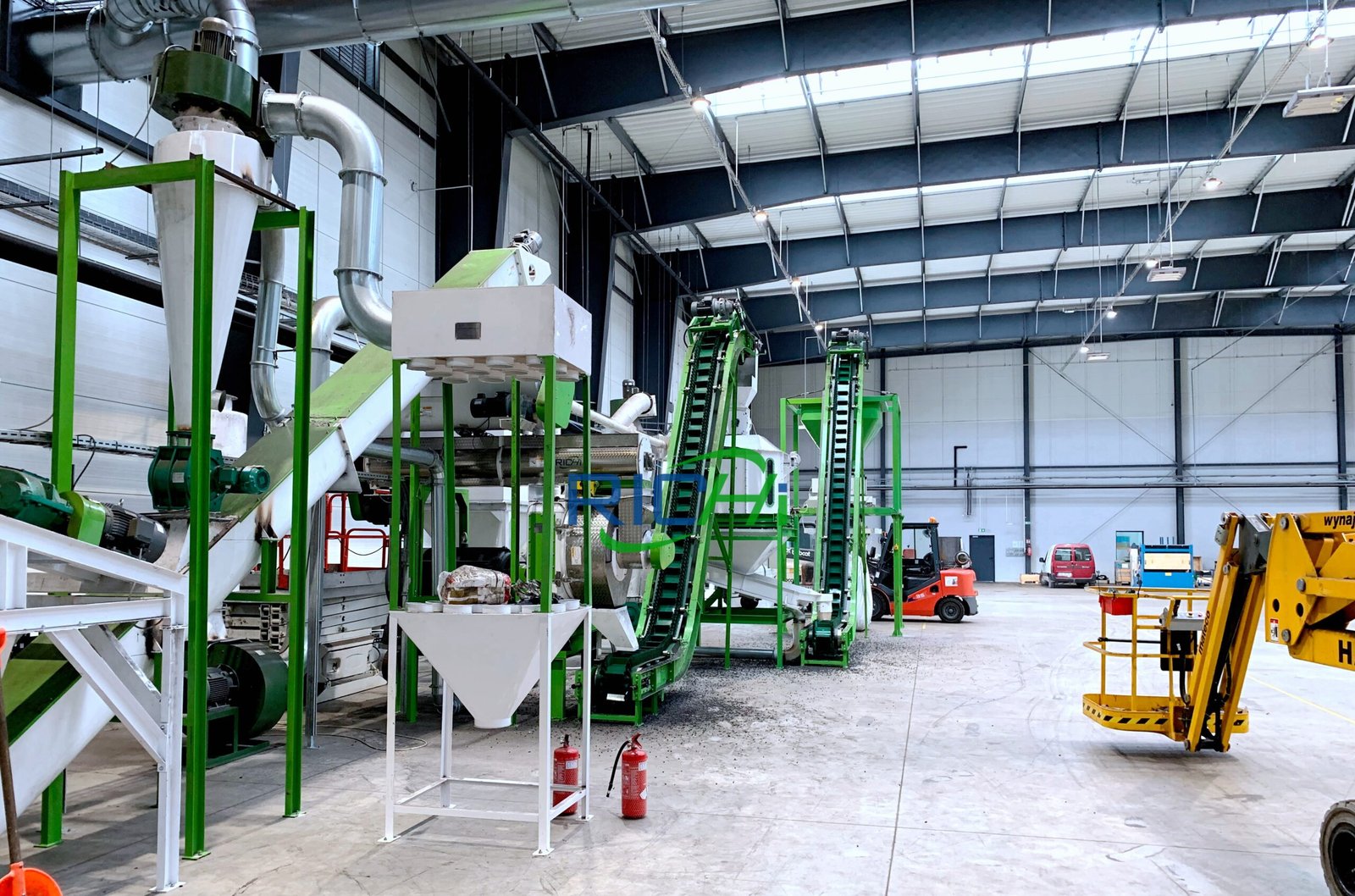
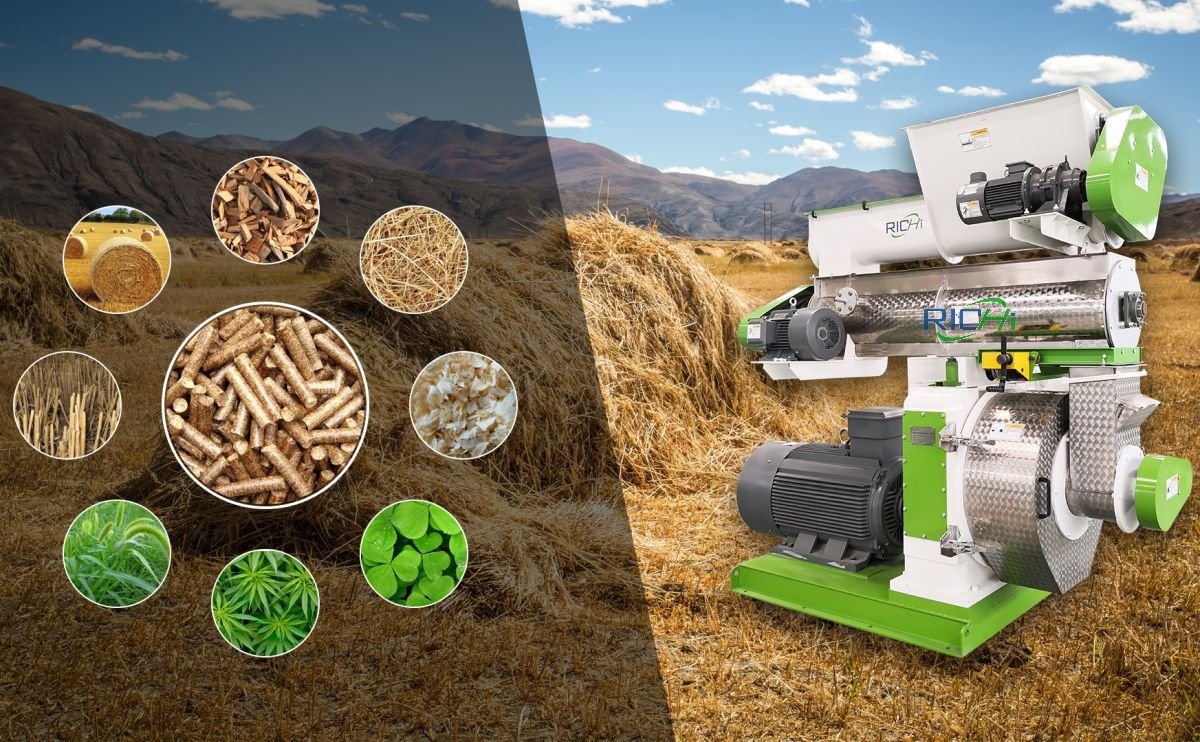
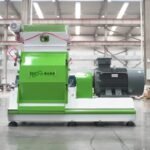
RICHI Machinery can be a cost-effective maintenance candidate where the offered machine uses accessible wear components, clear identifiers, documented intervals, and a line layout designed for service. The supplied photograph shows a RICHI pellet mill in a factory, but it contains no maintenance cost or wear-life data. It should be used as visual context, not proof of low cost.
Ask RICHI for the recommended commissioning-spare list, two-year operating-spare list, unit prices, normal manufacturing lead times, die and roller specifications, lubricant schedule, special tools, maintenance task times, and model-specific drawings. Request a comparable reference using similar raw material and annual hours. The maintenance case becomes credible when parts, labor, and downtime can be calculated.
Compare established alternatives fairly
CPM, ANDRITZ, and Bühler may create lower lifecycle maintenance risk through established platforms, engineering systems, and installed-base experience, but proprietary components or service structures can affect price. AMANDUS KAHL may be advantageous on specific compaction duties. Van Aarsen and Ottevanger may create value through feed-line integration and accessible plant design.
Do not compare one supplier’s original parts with another’s unverified local substitutes. Use equivalent quality and delivery assumptions. Also separate owner-stocked parts from annual consumption: a gearbox held as insurance ties up cash but is not consumed every year. Model carrying cost and obsolescence separately.
Die and roller economics
Record purchase price, expected tonnes, reconditioning options, change time, and quality behavior for each die and roller set. Cost per tonne equals purchase and service cost divided by accepted tonnes produced. A cheaper die with shorter life can be more expensive. A longer-life die that produces excessive fines can also be poor value.
Compression geometry creates a trade-off between durability, throughput, energy, and wear. The correct specification varies by formula or biomass. Ask whether one die can serve the portfolio or several are required. Include inventory and changeover cost in the maintenance model.
Condition monitoring should lead to action
Vibration, temperature, motor current, oil condition, pressure, and runtime data can help detect degradation, but sensors alone do not reduce cost. The plant needs baselines, alarm thresholds, inspection actions, work-order ownership, and records of findings. Poorly placed or uncalibrated sensors create false alarms and wasted labor.
Ask each supplier which failure modes are detectable, how much warning is realistic, and what action follows. Predictive claims should identify the evidence chain. If only total vibration is measured without bearing condition, speed context, or trend history, the system may support screening but not a precise diagnosis.
Downtime changes the brand ranking
A part costing USD 2,000 with a four-week lead time may be riskier than a USD 4,000 part available quickly. Calculate criticality from probability, consequence, and restoration time. Identify single-point failures and determine whether redundancy, an on-site spare, or a repair agreement is justified.
There is a trade-off between spare inventory and cash. Stocking every component is uneconomic; stocking none exposes production. Classify parts as consumable, critical insurance, repairable, and noncritical. Update the list after actual operating history replaces supplier estimates.
Maintenance comparison request
- Five-year parts quantities, unit prices, and escalation basis.
- Task intervals, labor hours, skills, tools, and shutdown requirements.
- Die, roller, screen, hammer, liner, bearing, seal, and lubricant assumptions.
- Critical-part lead times and repair options.
- Warranty exclusions related to wear, material, and operator settings.
- Condition-monitoring points and required actions.
- Maintenance clearances and lifting arrangements in the layout.
- Comparable reference data with raw material and annual hours.
- Owner training and document handover.
Run a sensitivity analysis
Vary abrasive content, annual hours, accepted output, die life, labor rate, electricity, freight, and major repair frequency. A brand that wins the base case may lose under the adverse material case. This is especially important when the feedstock contract is not secure or seasonal variability is high.
The recommendation changes when the owner has strong workshop capability. A mechanically simple platform may be inexpensive to maintain internally. A plant with limited technicians may benefit from more monitoring, remote support, and modular replacement even at higher parts cost.
Simulate a maintenance day before purchase
Use the layout and machine manual to run a tabletop maintenance exercise. Start with a planned die change, then add a seized fastener, unavailable overhead crane, and an instrument that must be recalibrated. Ask the supplier and plant team to identify isolation points, sequence, tools, lifting, work permits, parts, inspection criteria, and restart checks. Record uncertainty rather than assuming an experienced technician will solve it.
The exercise often reveals costs hidden from the bill of materials: temporary platforms, special pullers, extra technicians, production cleaning, consumables, and the time required to restore alignment. It also exposes whether manuals and drawings are detailed enough for the owner to work independently. Repeat the exercise for the highest-consequence failure and the most frequent routine task.
Understand the boundary between warranty and maintenance
Warranty coverage does not eliminate maintenance cost. Wear parts are commonly treated differently from manufacturing defects, and coverage may depend on approved material, lubrication, settings, installation, and service records. Ask bidders to mark each major part as normal wear, warranted component, or condition-dependent. Require the claim process, evidence, freight responsibility, labor treatment, and remedy time.
A long warranty with broad exclusions may provide less value than a shorter, clearer warranty supported by fast diagnosis. Preserve motor-current trends, maintenance logs, oil records, photos, alarm history, and replaced parts. Good records help distinguish a defect from overload or contaminated material and reduce dispute time.
Score uncertainty, not only the quoted number
Give each maintenance input a confidence grade. A fixed part price with a drawing number may be high confidence; a salesperson’s verbal wear-life estimate may be low. Calculate both expected cost and a reasonable adverse case. Suppliers that disclose assumptions and uncertainty should score better than those offering an unrealistically precise low total.
At final comparison, separate controllable cost from exposure. Operator inspection, cleaning, and planned adjustment are controllable. Raw-material contamination may be shared with procurement. Overseas freight and rare major failures are exposure. Assign an owner and mitigation to each item so the final maintenance ranking leads to an operating plan.
Final answer
No company can be named the universal lowest-maintenance pellet machine supplier from public brand information alone. RICHI deserves a cost comparison, as do CPM, ANDRITZ, Bühler, KAHL, Van Aarsen, and Ottevanger. The result should be based on a five-year, material-specific maintenance bill and expected downtime.
A defensible winner has the lowest credible maintenance cost per accepted tonne, accessible service tasks, predictable wear, manageable critical-part lead times, and evidence from a comparable duty. That answer may differ from both the lowest purchase price and the most famous brand.