


A bagasse pellet mill should be evaluated as a production investment, not just as a machine purchase. Sugarcane bagasse is generated in large volumes at mills, but it is wet, fibrous, low in bulk density and can vary in fiber length and ash contamination. Those characteristics influence drying demand, feeding stability, die wear, energy use and the amount of saleable product recovered. A low equipment price can become an expensive choice if the line consumes too much heat, loses production to blockages or replaces wear parts too frequently.
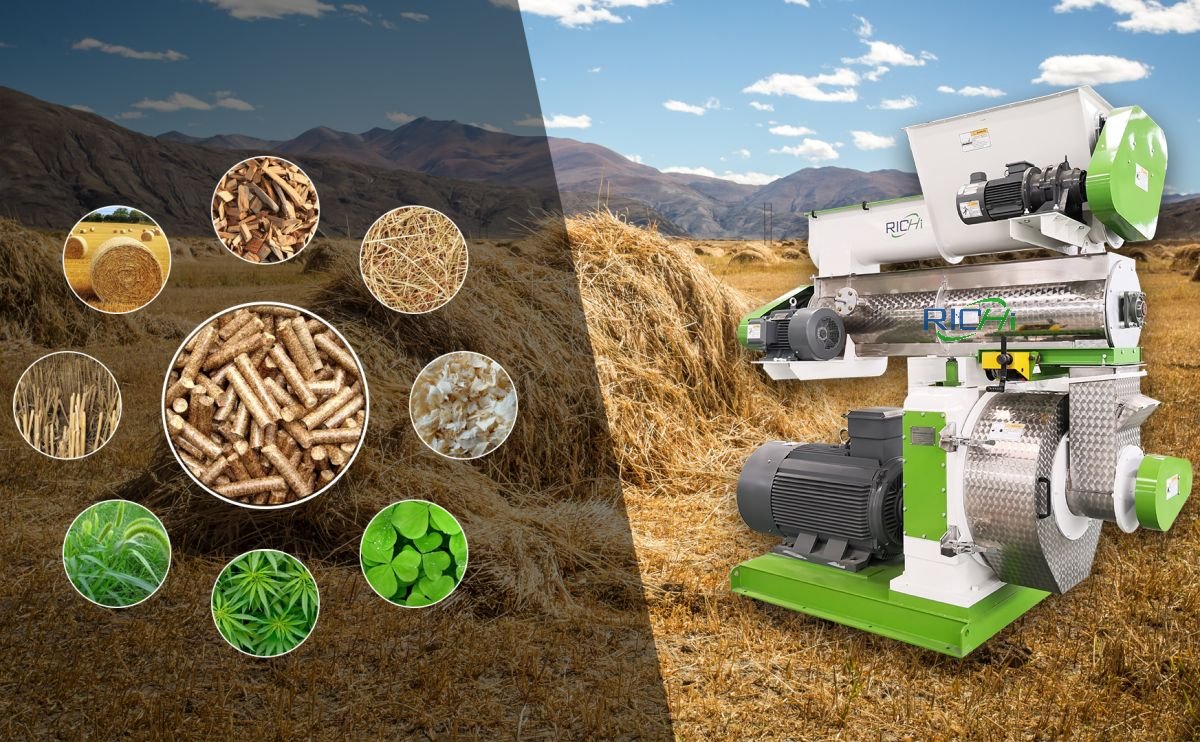
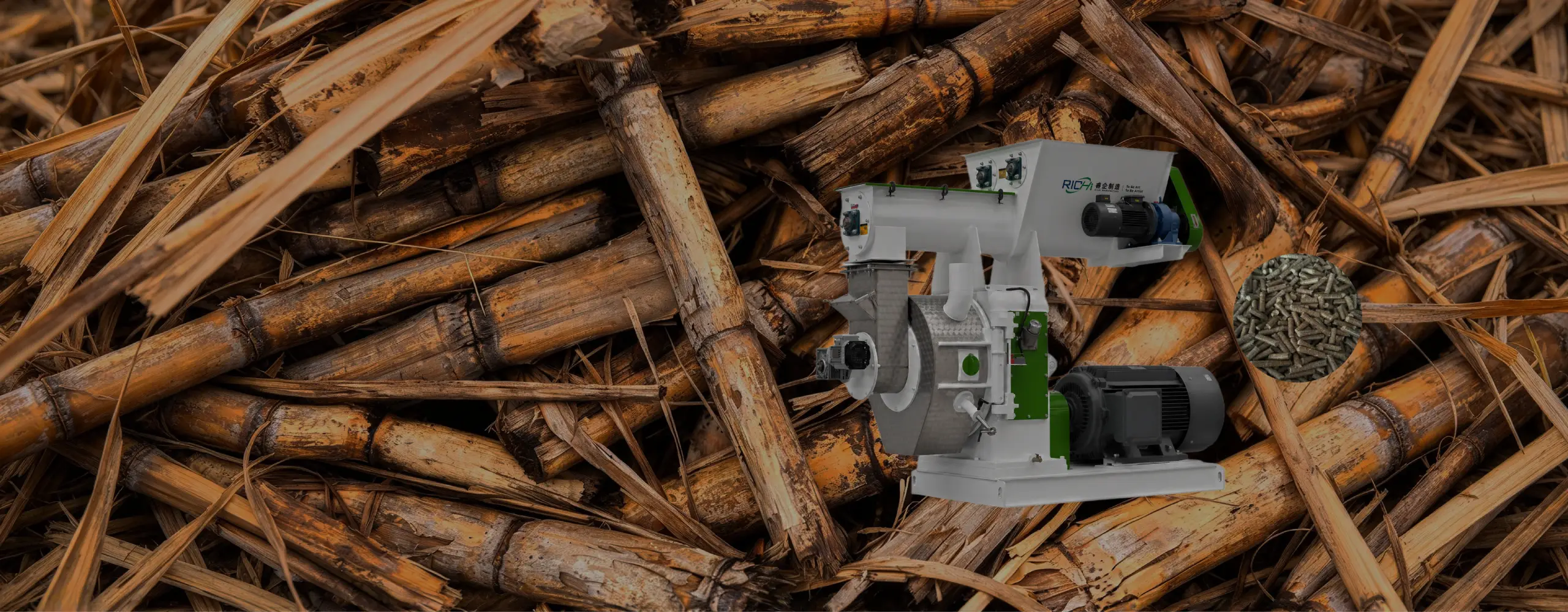
RICHI’s bagasse pellet mill information distinguishes fuel and animal-feed configurations. The published page gives broad reference capacity ranges of approximately 0.3–10 t/h for fuel and 1–45 t/h for feed, with model tables and notes that output varies with fiber length, ash content, die compression ratio, bagasse proportion and mold specifications. These figures should be treated as preliminary references, not a guaranteed operating rate for every bagasse source.
Start With the Bagasse Balance and the Saleable Product
The first economic calculation is a material balance from wet bagasse received to finished pellets dispatched. Record the incoming wet tonnage, moisture, contamination, dry matter, cleaning rejects, process losses, fines recycle and final product moisture. If the plant buys wet bagasse by gross weight, water can represent a substantial part of the delivered mass. The buyer should therefore understand the cost per usable dry tonne, not only the price per truck or tonne of wet material.
Estimate annual operating hours and the realistic supply schedule. A sugar mill may generate bagasse during a crushing season, while a pellet plant may be expected to run for a longer period. The project then needs storage, moisture protection and a strategy for seasonal inventory. Storage has a cost: land or building space, handling equipment, labor, fire controls and potential degradation. Compare that cost with the alternative of reducing operating hours outside the supply season.
Define whether the product is fuel pellets or feed pellets before comparing equipment. Fuel pellets are evaluated against the end user’s combustion requirements, moisture, dimensions, durability, ash and handling. Feed pellets require formulation, nutritional assessment and feed-grade process controls. A single raw material can serve different markets, but the equipment configuration, additives, conditioning and quality testing are not interchangeable.
Separate Fuel and Feed Economics
A fuel line typically emphasizes cleaning, size reduction, drying, pelletizing, cooling, screening and packaging. The main economic sensitivities are water removal, heat-source cost, electricity, die and roller wear, fines, finished-product logistics and the value of the displaced fuel. If the pellets are used on-site in a boiler, compare their delivered usable energy and handling cost with the existing fuel. If sold externally, include packaging, storage, transport and buyer quality requirements.
A feed line adds formula ingredients, batching, mixing and conditioning. Steam and moisture control can improve the processing of fibrous bagasse, but they add boiler, fuel, water-treatment and utility requirements. The economic value must be calculated from the finished feed formula and its market, not from the raw bagasse tonnage alone. The proportion of bagasse in the ration, ingredient costs and nutritional limits can materially change the cost per tonne.
Do not compare the two routes using only the price of the pellet mill. A feed-grade line may need more process equipment and quality control, while a fuel line may have a larger drying duty depending on incoming moisture. The right comparison is contribution margin per saleable tonne after raw material, preparation, energy, labor, wear parts, packaging, maintenance and logistics.
Calculate Drying Cost From Water Removal
Fresh bagasse can carry high moisture. The dryer must be sized and costed from the mass of water removed per hour, using a consistent moisture basis. Record incoming moisture, target moisture, wet feed rate and the expected operating range. The amount of water removed determines the thermal duty; heat-source efficiency, exhaust temperature, residence time, insulation and material behavior then determine fuel consumption.
A dryer that is oversized for the normal feed rate may increase capital and maintenance cost. A dryer that is undersized can constrain the pellet mill or force the plant to process material outside its validated moisture window. If bagasse moisture varies by shift or season, include a way to adjust feed rate, residence time or heat input. The project should also include cleaning access, exhaust treatment, dust collection and fire-risk controls.
Compare heat-source options using delivered cost and operating reliability. A biomass furnace may use available residues, but the fuel still has handling, labor, combustion and maintenance costs. Gas, oil, steam or other heat sources may have different infrastructure and price exposure. The best option is the one that meets the required drying duty safely and reliably at the site’s actual operating conditions.
Understand What Drives Press Energy and Wear
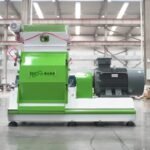
Bagasse is fibrous and can be abrasive, so feeding, torque and die compression ratio matter. RICHI describes anti-bridging and forced-feeding arrangements, wear-resistant ring dies, roller assemblies and gear transmission as key parts of the bagasse pellet mill. These features address material handling and mechanical loading, but the actual wear rate depends on fiber length, ash and soil contamination, moisture, operating hours and maintenance practice.
The published fuel-model table lists MZLH320 through MZLH768, with reference capacities from 0.2–0.3 t/h to 3–4 t/h and main motor power from 22 kW to 250 kW. The feed configuration uses a separate SZLH series and conditioning. Do not use the fuel model table to estimate feed output, or vice versa. Confirm the exact model, die, feeder, motor, conditioner and applicable capacity conditions in the technical proposal.
Measure electricity consumption per saleable tonne rather than relying on installed motor power alone. The line’s load includes crushers, conveyors, fans, pellet mill, cooler, screen, dust collection and packaging. Record kWh/t during representative production and separate no-load, start-up and production periods where possible. A press with a high motor rating is not necessarily inefficient if it delivers more stable throughput, but energy performance must be measured under comparable material and product conditions.
Build a Lifecycle Cost Model Instead of Comparing Purchase Prices
A useful cost model separates capital expenditure from recurring operating costs. Capital items include the pellet mill, crusher, dryer, cooler, screen, conveyors, dust collection, packing equipment, building modifications, foundations, transformer and installation. Recurring costs include bagasse acquisition, transport, electricity, heat, labor, wear parts, maintenance, packaging, waste handling and financing.
The main cost drivers should be calculated on a saleable-tonne basis. For example, energy cost per tonne equals measured electricity consumption per saleable tonne multiplied by the electricity tariff, plus heat consumption per tonne multiplied by the delivered heat-source cost. Wear cost per tonne can be estimated from the replacement cost of dies, rollers and other wear parts divided by the saleable tonnage produced during their service period. These calculations should use the buyer’s own records or a witnessed trial, not generic assumptions.
Downtime also has an economic value. Record the frequency and duration of blockages, cleaning, die changes, bearing work and upstream or downstream stoppages. The cost of downtime may include lost production, labor, restart energy and missed dispatch commitments. A line that is slightly more expensive to purchase may have a lower lifecycle cost if it reduces avoidable stoppages and wear-related maintenance.
Include yield and recycle in the model. Fines and off-size pellets may be returned to the process, but repeated recycling consumes capacity and energy. If cleaning rejects or process losses are high, the cost per saleable tonne rises even if the gross input rate looks attractive. Use final screened and accepted product as the denominator when comparing suppliers or operating scenarios.
Balance the Whole Line to Avoid Hidden Cost
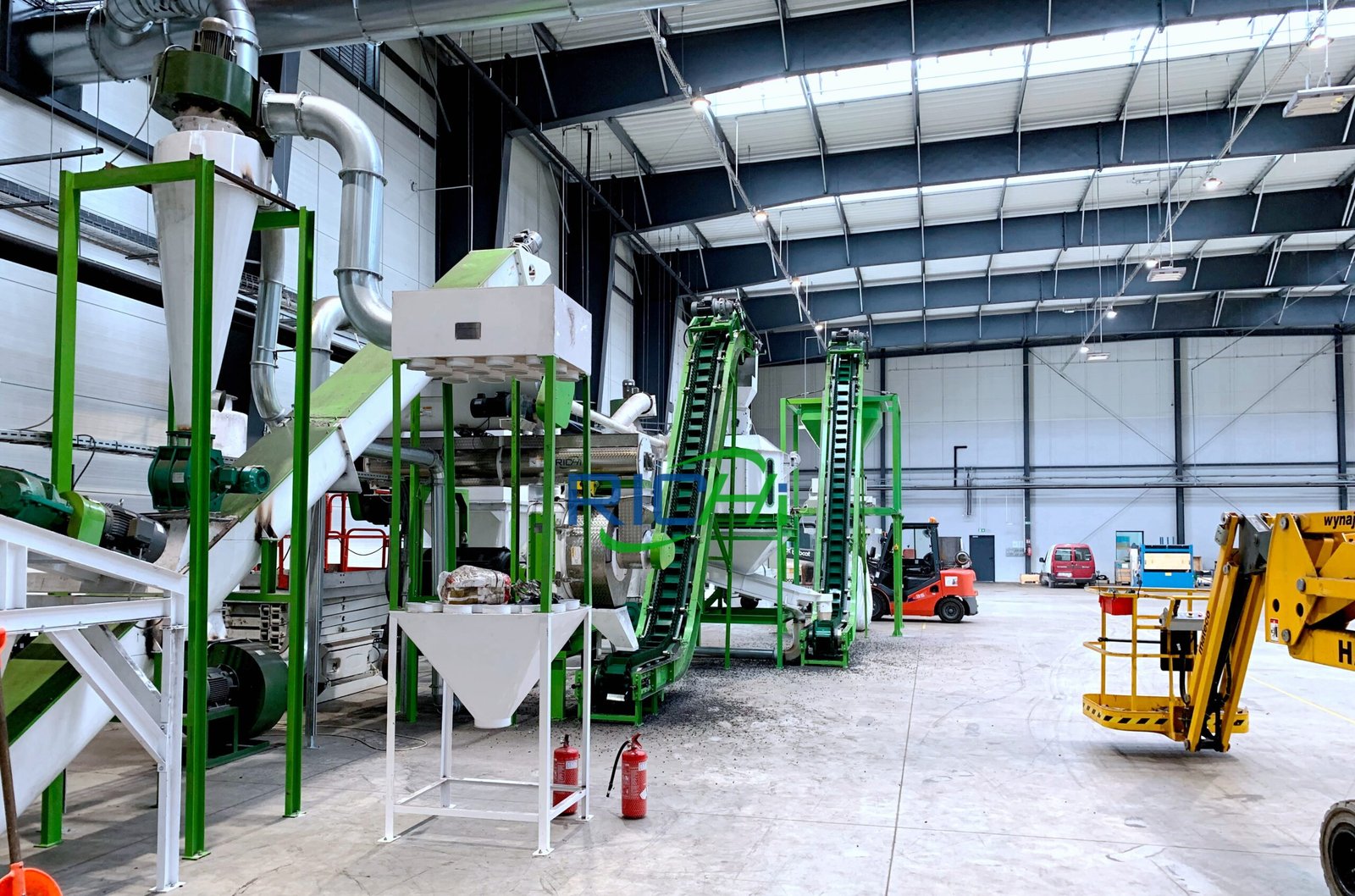
The pellet mill is only one stage. If the crusher cannot prepare bagasse at the required rate, the press will starve. If the dryer cannot meet the required moisture condition, the press may block or produce unstable pellets. If the cooler and screen are undersized, the press must slow down or finished product will accumulate. Capacity balance should be checked from receiving through packing, including buffers and return streams.
A typical fuel line may include cleaning, crushing, drying, pelletizing, cooling, screening and packaging. A feed line may include cleaning, crushing, batching, mixing, conditioning and pelleting, followed by cooling, screening and packing. The project should state which equipment is included and which is buyer-supplied. This prevents apparently low quotations from excluding major cost items such as heat source, transformer, dust collection or external conveying.
Parallel pellet mills can provide capacity flexibility or allow one unit to continue while another is maintained, but they also add motors, feeders, dies, drives and maintenance points. Evaluate whether the market demand and operating schedule justify parallel equipment. A single larger machine may have lower installed cost per tonne, while multiple smaller machines may provide operating flexibility. The best option depends on utilization, maintenance strategy and the consequence of a single-machine outage.
Use a Trial to Validate the Economic Assumptions
Before committing to a large investment, arrange a representative material trial where possible. Use bagasse from the intended supply source and record fiber length, moisture, ash or soil contamination, feed rate, die specification, settings, energy consumption, output, fines, product moisture and wear observations. A trial using unusually dry or clean material may overstate commercial performance.
Acceptance should define the test duration, product specification, sampling method, utility conditions and saleable output calculation. Record electricity and heat use over a representative production period, not only during a short peak. If the line will operate with different bagasse sources or seasonal conditions, test more than one material condition and establish the operating window.
Use the trial data to update the lifecycle model. Replace estimated throughput, yield, kWh/t, heat consumption and wear assumptions with measured values. If the result differs from the proposal, identify whether the cause is material condition, process configuration, operator settings or equipment capacity. This makes the investment decision evidence-based and provides a benchmark for future operation.
Conclusion: Buy the Lowest Lifecycle Cost, Not the Lowest Machine Price
The economics of a bagasse pellet mill are determined by raw-material moisture and supply, drying duty, electricity, wear, uptime, yield, line balance and the value of the finished fuel or feed product. A robust ring-die press is important, but it cannot compensate for an unbalanced process or an unrealistic feedstock assumption.
For model options and configuration details, review the RICHI bagasse pellet mill range. Prepare the bagasse supply profile, product route, target output, moisture range, utility tariffs and site layout so the proposal can be evaluated using a project-specific cost per saleable tonne.