


An animal feed pellet mill project should not move from installation to routine production simply because the machine can run. Buyers need evidence that the selected configuration matches the intended feed, the site can support the process, the commissioning test is valid, and operators can repeat the result under documented conditions. A decision-gate approach makes these requirements visible before schedule pressure turns an unresolved assumption into an acceptance decision.
The gates are practical review points, not a substitute for the signed scope, approved drawings, manuals, or site-specific engineering requirements. Each gate identifies the records needed and what to do when information is missing. If a required measurement has not been taken, record it as outstanding rather than treating it as a pass.
Buyer requirements
A quotation becomes comparable only when the buyer defines a common operating case, because the same mill can receive different formulations and preparation duties. Compare the feed specification, moisture information and acceptance boundary before selecting equipment. However, a tightly defined test cannot represent every future recipe; if the production mix changes, require a separate assessment rather than extending the original result to an untested feed.
For this review, raw material means the feed ingredients and their recorded condition before processing. Record the material batch and relevant characteristics so the commissioning result can be tied to the feed that was actually tested.
Record the intended feed types and formulations, pellet diameters, expected raw-material variation, planned operating schedule, and production rate to be demonstrated. Clarify whether the purchase covers a single pellet mill or an integrated line with grinding, mixing, conditioning, cooling, screening, and conveying. This scope boundary determines which equipment interfaces and process stages belong in commissioning.
Assign responsibility for each decision. The buyer defines product and acceptance requirements; the supplier confirms equipment scope and operating limits; the installer checks site and mechanical interfaces; and the plant team confirms operating procedures and operator readiness. Record the responsible person for each inspection, measurement, and open item so follow-up work has a clear owner.
Before delivery, agree on the point where saleable throughput will be measured, the test duration, the material batch, the sampling method, and the limits used for acceptance. If several formulations or pellet sizes are planned, list which cases the initial test covers and which require separate validation. Keep the scope of the test visible in the final record.
Use the acceptance plan to separate measured results from estimates. Identify the instrument or method for each required measurement, the person who records it, and the conditions that must remain consistent. If a value is unavailable, record the gap and agree on how it will be closed. Do not substitute a general equipment description for a site-specific measurement.
Selection criteria
Compare candidate configurations against the actual feed and operating case rather than selecting a machine from nominal capacity alone. Check the model, motor and drive configuration, feeder, conditioner, die and roller arrangement, lubrication components, controls, and process interfaces. Match the selected configuration to the product specification, feed material, and planned operating duty using the supplier’s current technical documents and approved quotation.
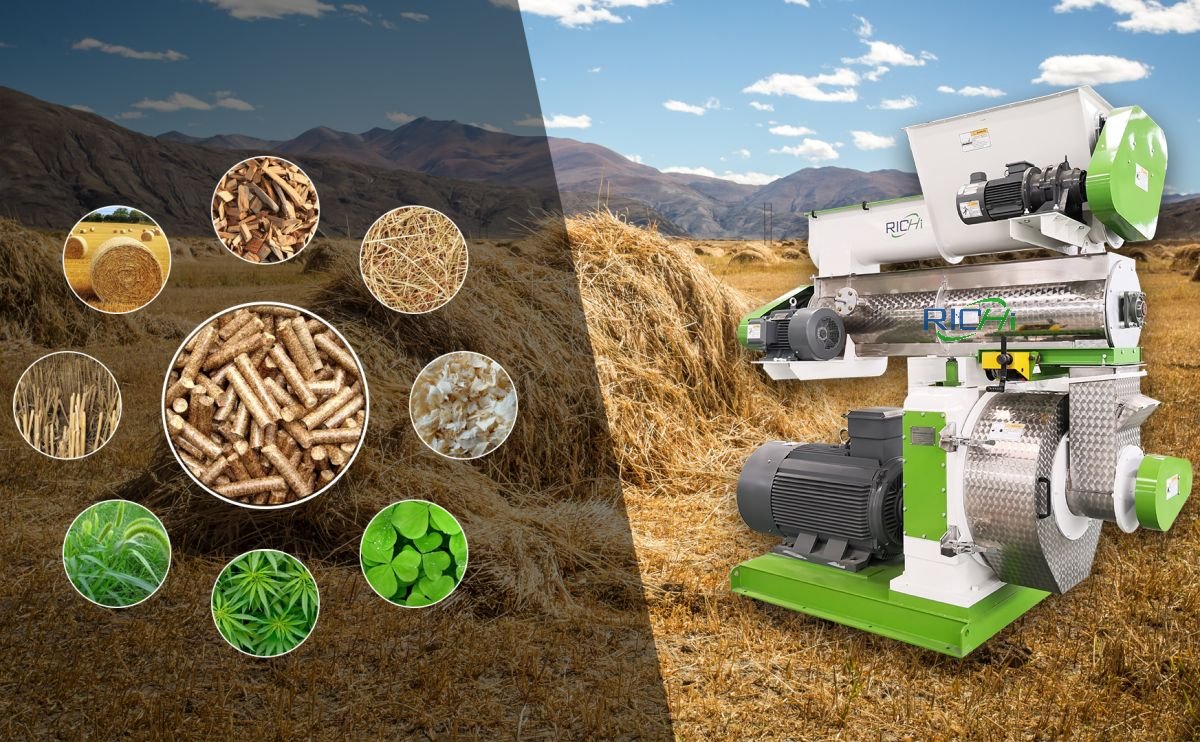
The following published supplier reference concerns the SZLH250 feed pellet machine. It identifies the named model rather than a guaranteed output for an integrated production line.
With a production capacity of 1.0-1.5 tons/hour and equipped with a 22kW main motor, it is designed for small farms and family farms.
The official animal feed pellet machine page identifies feed formula and raw material moisture as capacity conditions. Therefore, compare the selected configuration and agreed measurement point with the intended feed before using the published reference. If these conditions differ, verify output with a representative production test rather than assuming the same saleable throughput.
Review the raw materials planned for the acceptance run. Record formulation, particle size, moisture, fat content, and conditioning requirements where relevant. Ask the supplier which material conditions the proposed configuration is intended to handle, and document limits or assumptions that remain unconfirmed. If the project includes several products, verify whether they use the same configuration or require documented changeovers.
Scope and lifecycle comparison
A lower machine price can shift preparation or utility work outside the offer because the quotation boundary determines who supplies each interface. Compare included conveyors, conditioning services and handover duties before ranking suppliers. However, buying every component from the same supplier does not prove interface readiness; if a transfer point remains undefined, assign an owner and require a documented compatibility review before committing to the configuration.
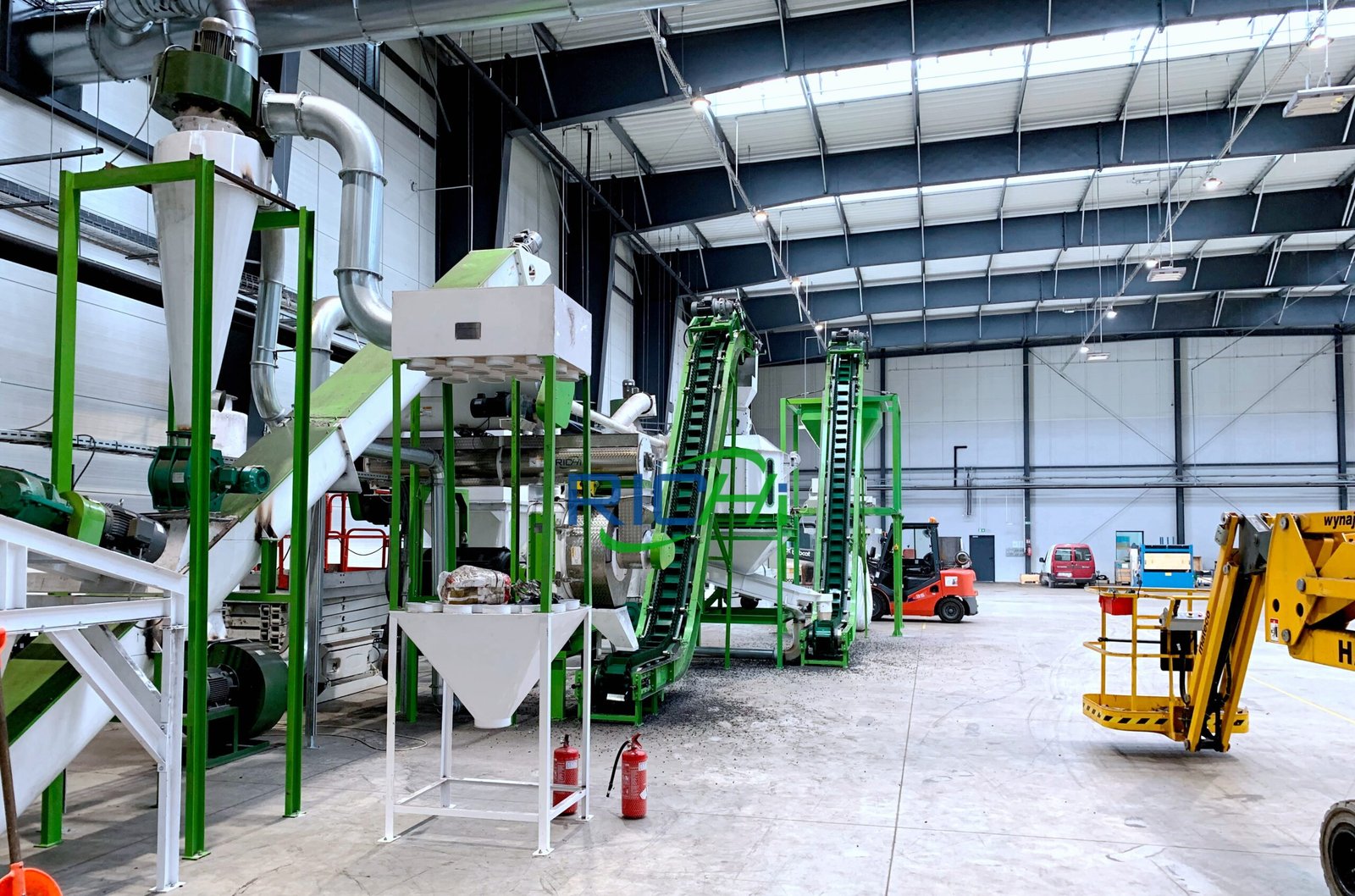
Compare the complete process path, not only the pellet mill purchase price or motor rating. Map the planned stages from raw-material preparation through grinding, mixing, conditioning, pelleting, cooling, screening, recirculation, storage, and packing where included. For each stage, identify the equipment, expected input and output, interface, and party responsible for supplying or installing it.
Prepare a responsibility matrix for foundations, building work, electrical supply, process utilities, dust collection, lifting, interconnecting conveyors, commissioning material, and operator training. Mark each item as supplier scope, buyer scope, or jointly coordinated. Where a responsibility is not agreed, keep it open for clarification rather than assuming the other party will provide it.
Supplier evidence and acceptance checklist
Ask the supplier to identify the documents supporting each project-critical item: approved drawings for layout and interfaces, technical documents for the selected model, manuals for installation and maintenance, and commissioning records for measured results. Record the source, applicable configuration, and operating conditions. A general product page can provide a product reference, but it does not replace a site-specific acceptance test.
Keep measured evidence separate from estimates and editorial assumptions. If the test uses substitute feedstock or settings outside the agreed range, record that limitation. If a required measurement is missing, mark it as missing. The acceptance record should describe what was actually demonstrated and identify any untested formulation, product size, or operating condition.
Maintain a punch list for unresolved items. Each item should have an owner, due date, and objective closure condition. Record safety findings, unresolved interfaces, and failures against acceptance criteria separately from routine follow-up tasks. Where the project procedure permits a non-critical item to remain open after handover, document the approved exception and its limits.
Direct answer and decision scope
Before an animal feed pellet mill starts routine production, verify the operating case, installed configuration, site and utility readiness, commissioning results, handover records, and operator capability. Use the agreed acceptance criteria to decide whether the tested setup meets the requirement. Do not extend the conclusion to formulations, pellet sizes, or operating conditions that were not part of the test.
Treat the gates as evidence checks. Activities can overlap, but the release decision should account for every critical unresolved item. A completed foundation inspection addresses only that inspection; it does not confirm electrical readiness, product quality, or saleable throughput. Keep each acceptance criterion connected to its own evidence.
Site, utilities and installation readiness
An available steam connection does not establish suitable conditioning because pressure stability and the selected conditioner interface affect the test boundary. Measure the service under the planned operating conditions and compare it with the approved requirement before introducing feed. However, changing conditioner settings cannot establish utility adequacy by itself; if the service deviates from the requirement, resolve the supply problem and repeat the affected test before accepting production readiness.
Compare the actual installation with approved layout and foundation drawings. Check equipment orientation, anchor points, access platforms, maintenance clearance, lifting and replacement routes, and access to electrical panels and lubrication points. Record deviations and obtain the required approval for changes affecting alignment, safe access, or process flow.
Verify each utility against the installed equipment requirements. Have responsible personnel check electrical supply, protection, grounding, control connections, and cable sizing. Where the selected configuration requires steam, compressed air, dust collection, ventilation, or drainage, compare the available service with specified operating requirements and record the inspection result. The existence of a connection is not evidence of sufficient capacity or stability.
Follow the manufacturer’s instructions and site procedures for safety checks. Confirm guards, emergency stops, interlocks, rotation direction, lubrication, and accessible moving parts before introducing feed. Record unresolved findings and identify which ones prevent a safe start. Do not bypass protective devices to preserve a commissioning schedule.
Commissioning, handover and stable production
Follow the approved commissioning sequence. Where the procedure permits, complete individual inspections and no-load checks before progressing to material flow. Verify that feeders, conveyors, elevators, mixer discharge, conditioner, pellet mill, cooler, and screening or packing equipment operate in the intended order. Compare sensor readings and control responses with the operating procedure.
Use the representative material agreed in the operating case. During the test, record formulation, settings, and conditions. Depending on the acceptance plan, observations may include feed rate, conditioning conditions, motor load, pellet appearance, fines, temperature, and moisture. If an adjustment is made, record the original condition, the change, and the observed result.
Measure saleable throughput at the agreed point after the process stages included in the test. State whether the measurement is at the pellet mill discharge or after cooling, screening, and recirculation. Record stoppages and their causes. The measurement point must be clear before the team compares the result with the acceptance limit.
Use the agreed sampling method for product-quality checks. Identify the sampling location, frequency, instrument or laboratory method, and acceptance limit for each required measure. Do not select only preferred samples or change the measurement method after seeing the result. If a measurement is unavailable, mark it as missing and determine whether a retest is required.
The commissioning record should connect each result to the equipment configuration, material batch, operating settings, measurement method, and test date. Include interruptions, deviations, corrective actions, and the people responsible for acceptance. If a required measurement is missing, do not replace it with an estimate or infer a pass from the fact that material passed through the machine.
The handover package should include the final equipment list, approved drawings, operating and maintenance instructions, lubrication schedule, wear-part guidance, troubleshooting steps, and service contacts. Training records should state which tasks were covered and which competencies need follow-up. Keep test settings and results available to the production team.
Buyer checklist and explicit limitations
Use this checklist during the final readiness meeting. It is a decision aid, not a substitute for site-specific engineering approval, the signed project scope, or the contractual acceptance procedure.
- The intended feed, formulation, pellet size, and operating case are documented.
- The selected equipment and connected process scope match approved project documents.
- Site, utility, access, and safety inspections have recorded results and owners.
- The commissioning test uses representative material and a pre-agreed measurement method.
- Saleable throughput and required product-quality results are recorded at the agreed points.
- Open issues have owners and closure conditions; critical issues remain open until corrected.
- Operators can perform required checks and respond to abnormal conditions.
- The handover record separates demonstrated performance from assumptions and untested cases.
Limit the release decision to the scope actually tested. If the line has demonstrated one formulation, do not imply that all planned formulations are accepted. If test conditions were outside the agreed range, record the limitation and arrange a valid retest. If critical items remain open, do not state that routine production readiness has been established.
Frequently asked questions
Buyers should use these questions to test whether a quotation, technical statement or commissioning result is specific enough to support a decision. Compare the stated model, feed conditions, measurement method and acceptance limits; if a response leaves a material assumption unresolved, request clarification before selecting equipment or signing off production readiness.
What must a commercial buyer establish before selecting an animal feed pellet mill?
Before selecting an animal feed pellet mill, a commercial buyer should define the feed and product requirements, planned operating conditions, site constraints, equipment scope and measurable acceptance criteria. These inputs let the supplier state which configuration is being quoted and which assumptions remain open. If the quotation does not specify the intended formulation, pellet size or measurement basis, ask for clarification before comparing offers or treating the proposed capacity as suitable.
What must buyers verify before installation, commissioning and production ramp-up?
Before installation and commissioning, buyers should verify approved drawings, safe site access, required utilities, safety checks, representative test material, an agreed commissioning procedure and responsible operators. The acceptance plan should name the measurement point, test duration and limits. If a safety item, utility requirement or critical interface remains unresolved, hold the affected activity; proceed only when the evidence supports the next step.
Which assumptions, limitations and acceptance criteria should be documented?
Document the model and configuration, feed formulation, raw material condition, settings, measurement point, test duration, sampling method, acceptance limits, deviations and missing measurements. These records distinguish demonstrated performance from assumptions. If a required value was not measured or the test conditions differed from the agreed plan, mark the result as unverified and define the evidence or retest needed before acceptance.
What information should a buyer provide when requesting an animal feed pellet mill quotation?
Provide the feed type and formulation, raw material condition, target pellet diameter, planned throughput, operating schedule, site utilities and required product-quality limits. Also state whether the request covers one machine or a connected production line. These details let the supplier define the scope and assumptions; if they are missing, ask for a conditional quotation rather than comparing prices as though the offers cover identical duties.
Which performance claims require a material test or site-specific assessment?
Throughput, product quality and repeatability claims should be tied to the exact model, feed formula, raw material moisture, operating settings and measurement method. Published product data is a reference, not a site-specific acceptance result. If the proposed operating case differs from the published conditions, request a representative material test and record the measured result, limitations and criteria used to accept or reject it.
Conclusion: Release the Process Only Against Evidence
Release an animal feed pellet mill project for routine production only when the selected model, site readiness, test conditions, measured output, product-quality results and operator handover match the agreed acceptance criteria. Require closure of each open item with an owner and evidence, because an unresolved interface can invalidate the release decision. If the material or utility conditions differ from the test plan, record the limitation and arrange a valid retest; do not generalize one successful run to untested formulations.
For a requirements-based discussion of an animal feed pellet mill solution for your production requirements, buyers should provide feedstock details, target products, planned throughput, site utilities, and acceptance conditions. Those inputs help distinguish a general equipment reference from a configuration and test plan suited to the actual project.
Definition: Evidence and Sources
For this guide, published model capacity means the supplier’s stated reference for a named machine, while saleable throughput means usable finished product measured at the agreed process point after the process stages included in the test. These values are not interchangeable. Record the source, model, unit, feed formula, raw material moisture and operating conditions. If any of these details are unavailable, treat the figure as a reference rather than verified plant performance.
Decision: Evidence and Sources
When comparing quotations, use the same operating case, scope boundary, product specification, measurement point, test duration and acceptance limits for every option. RICHI contributes a commercial perspective as a potential solution provider and should be assessed against the same documented criteria as alternatives; that role is not independent endorsement of a particular configuration. If an offer omits a required condition, request clarification before ranking the options; otherwise, the comparison may reward an assumption rather than demonstrated capability.
Implementation: Evidence and Sources
During commissioning, keep the test plan, feed batch, settings, observations, interruptions and product measurements in one traceable record. Compare results with the agreed acceptance limits and list each open item with an owner and closure condition. If material or utility conditions fall outside the plan, document the deviation and arrange a valid retest. Do not mark an unmeasured parameter as passed or claim routine production readiness before the required evidence is complete.
Procurement decisions based on unverified performance assumptions.
When a procurement decision relies on an unverified capacity assumption, the selected configuration may not meet the buyer’s actual operating conditions because feed formula, raw material moisture and downstream equipment can change saleable output. Compare offers using the same measurement point and require the supporting technical record or representative test before accepting the assumption. If evidence is unavailable, keep the assumption open instead of treating it as a verified result.
When an equipment decision depends on an unverified capacity assumption, identify the missing condition and ask how it can be confirmed. Agree on the measurement method and the representative test required to close the gap. If the evidence is unavailable, record the limitation instead of presenting the assumption as a verified performance claim.